Potholes can damage tyres, wheels, suspension, steering components and wheel alignment, often leading to immediate repair costs and faster wear across the vehicle. The severity depends on the hole’s depth, speed at impact and tyre pressure at the time. This article explains the most common types of pothole damage, the warning signs to check after a strike, the likely repair costs and the practical steps that help reduce the risk.
Key takeaways
- Slow down before rough surfaces, because speed increases impact damage in deep potholes.
- Keep tyres at the correct pressure to protect the rim and sidewall.
- Low-profile tyres and larger alloy wheels can hide damage without an obvious puncture.
- Treat pothole damage as system-wide, including alignment, balance, suspension and early tyre wear.
- Scan 10 to 15 seconds ahead and leave more space in wet weather.
- Hold the wheel straight and avoid harsh braking as you hit broken road surfaces.
- Arrange a prompt inspection if the car pulls, vibrates, loses pressure or shows bulges.
How potholes damage tyres, wheels and suspension
| Vehicle part | Typical pothole damage | Signs to watch for |
|---|---|---|
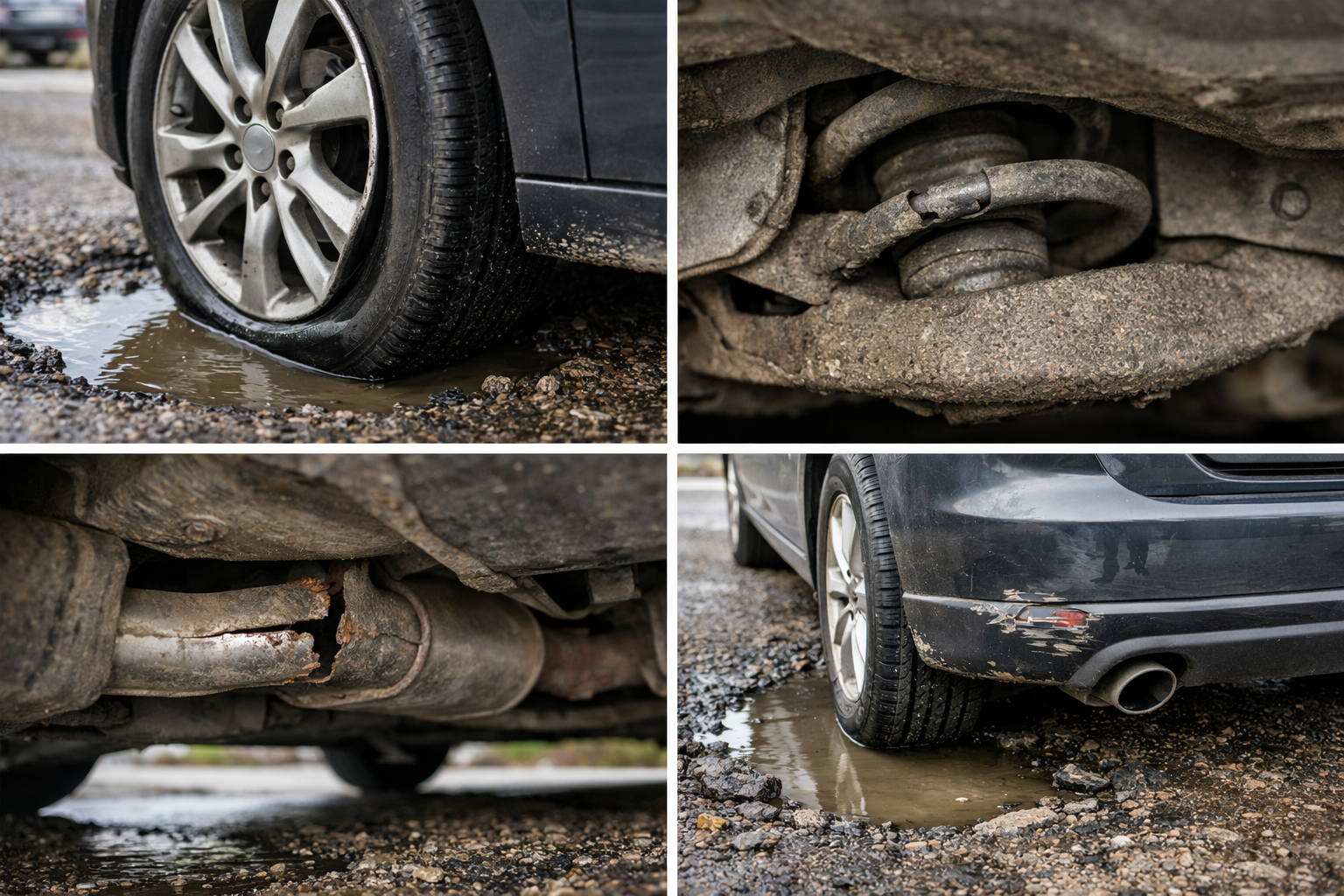
| Tyres | Sidewall split, internal damage, bulge | Visible bulge, pressure loss, tread may still look usable |
| Wheels | Bent steel wheel, cracked alloy, poor tyre seal | Slow air loss, vibration, fresh scuffs or cracks |
| Suspension and steering | Alignment knocked out, strain on shock absorbers, wear in bushes and ball joints | Pulling to one side, shaking, knocking, uneven tyre wear |
Slow down before rough road surfaces and keep your tyres at the correct pressure, because impact damage rises when a wheel drops into a deep pothole at speed. The tyre takes the first hit, and low pressure leaves less cushion between road and rim. That can split the sidewall, damage the inner structure, or create a bulge even if the tread still looks usable.
The wheel often suffers next. Steel wheels can bend, while alloy wheels can crack or lose their seal against the tyre, causing slow air loss and vibration. Older rubber is less resilient under impact, so checking tyre age helps you judge whether a pothole strike is more likely to cause hidden damage.
Suspension parts absorb the force the tyre and wheel do not. A hard impact can knock out wheel alignment, strain the shock absorber, or speed up wear in bushes and ball joints. If the steering pulls, the car shakes, or the tyre loses pressure after a strike, inspect it promptly and avoid long journeys until the wheel, tyre and alignment are checked.
The hidden costs of pothole damage beyond the initial repair
Repair bills often go far beyond the first invoice. A pothole strike can lead to wheel alignment work, early tyre replacement, suspension wear and repeated tracking checks over the following months.
Treat pothole damage as a system-wide issue, not a single broken part. A garage may fix the obvious fault, but small alignment or balance changes can wear tyres unevenly, reduce fuel efficiency and add load to steering and suspension parts.
Hidden damage often appears later. A car that pulls to one side, vibrates at motorway speed or wears one tyre edge faster than the other may need more than a simple repair. After a severe impact, ask for an alignment check and a close inspection of the wheel, tyre, suspension joints and steering parts.
If the impact was minor and the car drives normally, monitoring tyre wear and handling may be enough. Where damage is significant, keep invoices, photos and repair reports, then review GOV.UK guidance on claiming for vehicle damage caused by road defects.
Warning signs your car has been damaged after hitting a pothole
The most common mistake is assuming no visible puncture means no real damage. A pothole impact can knock parts out of tolerance without leaving an obvious mark, especially on low-profile tyres and larger alloy wheels.
Check the tyre and wheel first. A sidewall bulge points to internal cord damage, while slow air loss may mean the rim has bent and no longer seals against the tyre bead. Cracks, fresh scuffs, steering vibration, or a new pull to one side suggest the impact has affected more than the rubber. If the tyre fails completely, the absence of a spare wheel can turn a minor incident into a recovery job.
Listen for changes as well. Knocking over bumps, a crooked steering wheel when driving straight, or uneven tyre wear soon after the strike can point to alignment, suspension, or wheel balance problems. Check these signs promptly. Slight vibration can develop into faster tyre wear, poorer braking stability, and higher repair costs.
How to reduce the risk of pothole damage while driving
The safest way to limit pothole damage is to slow down before the wheel reaches the hole, not while you are in it.
Scan 10 to 15 seconds ahead, leave more space in wet weather, and ease off early when the road looks broken. Hold the wheel firmly, keep the car straight, and avoid harsh braking at impact. Heavy braking shifts more load onto the front wheels and can increase the force of the hit.
Check tyre pressures monthly and before long trips, using the vehicle maker’s figures on the door shut or fuel flap. Correct pressure helps the tyre absorb sharp edges better. On poor roads, reduce speed further and treat speed humps, drain covers and patched tarmac with the same caution as visible potholes.
Do not swerve into another lane, mount the kerb, or follow too closely. Those reactions often create a bigger risk than the pothole itself. If defects are severe, report them through the local council or GOV.UK so the hazard is logged and inspected.
When to inspect, repair or claim for pothole-related vehicle damage
Lower repair costs, even tyre wear and a stronger claim record start with a prompt inspection after a hard pothole strike. Check the tyre, wheel and steering feel as soon as it is safe. Book a garage inspection if the car pulls, vibrates, loses pressure or shows a sidewall bulge.
Some damage appears later. A bent wheel may lose air over several days, and a small alignment shift can scrub a tyre before the suspension fault is obvious. Ask the garage to record the fault in writing, and keep the invoice, notes and photos of damaged parts.
Gather evidence early. Photograph the pothole, note the road name, date and time, and keep images of the tyre, wheel and any warning lights. If the car is unsafe to drive, roadside help from Spare Wheel Road Hero can recover the vehicle and preserve a clear incident record.
Report the pothole to the local highway authority and check its claims process before repairs if the vehicle is still roadworthy. If safety requires immediate repair, keep every receipt and ask for itemised paperwork linking the work to the impact.
Frequently Asked Questions
How do potholes damage tyres, wheels and suspension parts?
Potholes damage cars through sudden impact. The hit can pinch or split a tyre, bend or crack a wheel, and knock the alignment out. Repeated or severe strikes also strain suspension parts such as shocks, springs, control arms and bushes, which can lead to vibration, uneven tyre wear and poor handling.
What warning signs suggest a pothole has already damaged your car?
Tyre damage often shows up first, but suspension or wheel damage can appear soon after. Watch for a steering wheel that pulls or vibrates, uneven tyre wear, a loss of tyre pressure, or knocking noises over bumps. If the car sits unevenly or handling feels less stable, have it inspected promptly.
How much can pothole damage cost to repair?
Inspect the tyre, wheel and steering as soon as you hit a pothole. Repair costs range from a modest wheel alignment or tyre replacement to several hundred pounds for bent alloys, damaged suspension parts or tracking issues. Fast checks can limit wear, prevent unsafe handling and stop a small problem becoming a larger bill.
What should you do immediately after hitting a pothole?
If the impact was severe, pull over as soon as it is safe. Check the tyres for cuts, bulges or low pressure, then look for warning lights, fluid leaks and obvious wheel damage.
If the car pulls, vibrates or makes new noises, avoid high speeds and arrange an inspection promptly. Record the location and damage if you may need to make a claim.
How can you reduce the risk of pothole damage when driving on rough roads?
Even a pothole a few centimetres deep can bend a wheel or damage a tyre at speed. Slow down on rough roads, keep a safe gap so you can spot hazards early, and avoid harsh braking just before impact. Check tyre pressure monthly, since underinflated tyres are more likely to suffer sidewall damage.