Wheel alignment adjusts the angles of the wheels so they point correctly, while wheel balancing evens out tyre and wheel weight to prevent vibration. Alignment affects steering, tyre wear and straight-line tracking, while balancing affects ride smoothness and vibration at speed. This article explains how each service works, the signs that indicate a problem, and when a vehicle may need one or both.
Key takeaways
- Wheel alignment corrects camber, caster and toe; balancing corrects uneven wheel and tyre weight.
- Book alignment if the car pulls, the steering wheel sits off-centre, or tyres wear on one edge.
- Toe errors wear tyres quickly because the tread scrubs across the road instead of rolling cleanly.
- Book balancing first when vibration appears through the steering wheel, seat, or floor at certain speeds.
- After kerb strikes, potholes, or suspension repairs, book alignment because wheel angles may have shifted.
- After new tyres, puncture repairs, or tyre refitting, book balancing to correct uneven mass distribution.
- Alignment checks wheel angles against maker settings; balancing spins each assembly and adds small weights.
Wheel alignment changes the tyre angles, while wheel balancing corrects uneven weight
| Service | What it corrects | Main signs | Typical trigger |
|---|---|---|---|
| Wheel alignment | Tyre angles such as camber, caster and toe | Pulling to one side, off-centre steering wheel, uneven edge wear | Pothole strike, kerb hit, suspension or steering work |
| Wheel balancing | Uneven weight in the wheel and tyre assembly | Vibration through the steering wheel, seat or floor at certain speeds | New tyre fitting, puncture repair, tyre removed and refitted to rim |
Book an alignment check if the car pulls to one side, the steering wheel sits off-centre, or the tyres wear more on one edge. Those signs point to wheel angles sitting outside the maker’s settings, which changes how each tyre meets the road.
Alignment adjusts camber, caster and toe. Toe has the biggest effect on tyre wear, because even a small error makes the tread scrub across the road instead of rolling cleanly. Balancing fixes a different fault. It adds small weights to the wheel so mass spreads evenly around the hub, which reduces vibration at speed.
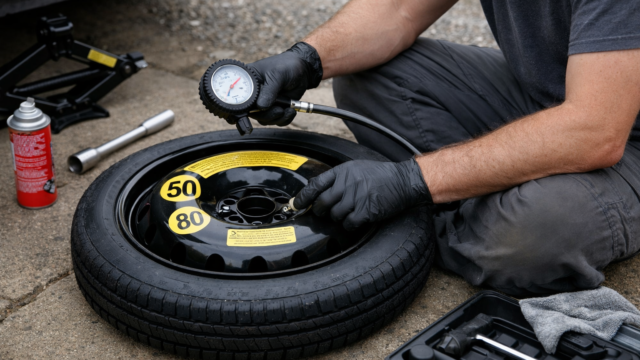
You need balancing when the steering wheel shakes, the seat vibrates, or new tyres have just been fitted. You need alignment after hitting a pothole, replacing suspension or steering parts, or noticing uneven wear. One service does not replace the other. If a tyre is badly worn or damaged, inspect it before relying on a temporary spare such as Space Saver Wheels, since temporary wheels have speed and distance limits.
Uneven tyre wear, pulling, and an off-centre steering wheel point to alignment problems
Poor alignment can wear one tyre shoulder fast and make the car drift on a straight road. Book an alignment inspection before replacing tyres or paying for balancing, because the problem sits in the wheel angles.
Check alignment first if the steering wheel sits off-centre, the car pulls left or right, or one tread edge wears faster. These faults change the tyre’s contact with the road on every rotation. Balancing will not fix that contact patch or stop early tread wear.
Similar symptoms can come from low tyre pressure, worn suspension bushes, damaged parts or a sticking brake. A proper inspection should rule those out first. If the angles are within the maker’s settings but vibration remains at certain speeds, balancing is the likely next step.
After alignment, the steering wheel should sit closer to centre and the car should track evenly on a level road. Check tyre wear again over the next few weeks. Fresh shoulder wear often means the fault has returned or another suspension part needs attention.
Vibration through the steering wheel, seat, or floor usually signals wheel balancing issues
Do not book an alignment first when vibration is the main symptom. Alignment angles rarely cause shake through the steering wheel, seat or floor. Start with wheel balancing, especially when vibration appears at certain speeds and fades outside that range.
Balancing fixes uneven mass in the wheel and tyre assembly. A technician spins the wheel on a balancing machine, finds heavy or light spots, and adds small weights to the rim so it rotates evenly.
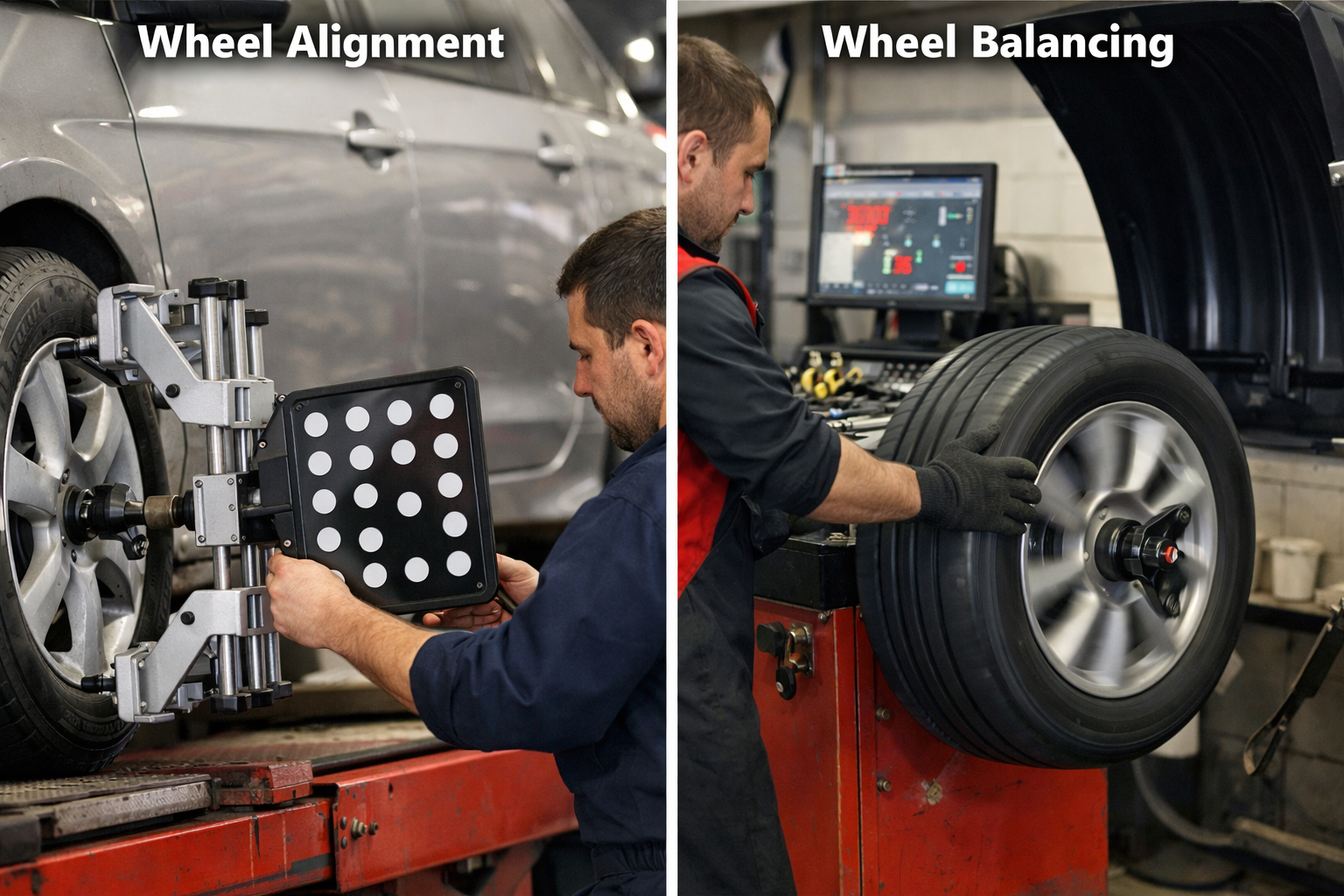
Where the vibration is felt helps narrow the fault. Steering wheel shake often points to front-wheel imbalance, while vibration through the seat or floor often points to the rear. A bent wheel, damaged tyre, mud inside the rim, or uneven wear can also upset balance, so inspect the assembly as well as measure it.
If vibration continues after balancing, check tyre condition and wheel damage next. Age can harden rubber or distort tyre structure, so check tyre age before ruling the tyres out. A properly balanced wheel should roll smoothly and reduce cabin vibration.
Kerb strikes, potholes, tyre fitting, and suspension work are the main times to book each service
Book a check after any hard kerb strike, deep pothole impact, tyre fitting, or suspension repair, because these can alter wheel angles, weight distribution, or both.
Match the booking to the event. After a kerb hit, pothole damage, or work on track rods, control arms, springs, or shocks, book wheel alignment. After fitting new tyres, repairing a puncture, or replacing a tyre on the rim, book wheel balancing. If the impact was severe or parts changed, ask the garage to inspect both.
Use a garage with modern alignment equipment and a calibrated balancing machine. Ask for alignment readings before and after adjustment, and check that the settings match the vehicle maker’s specification. For balancing, confirm that the technician removes old weights and checks for wheel damage.
Avoid booking only one service out of habit. New tyres do not always need alignment, and a pothole strike does not always cause imbalance alone. Check tyre pressures, bent wheels, and worn suspension bushes, because each can cause similar symptoms. Regular wheel maintenance helps spot damage early.
What alignment and balancing checks include, how long they take, and why both affect tyre life
Straighter steering, more even tyre wear, and less vibration depend on both checks being done properly. Alignment measures wheel angles against the vehicle maker’s settings and adjusts them where the suspension allows. Balancing spins each wheel and tyre assembly, then adds small weights so mass stays even as the wheel turns.
Balancing is often quick when tyres are already off the car or newly fitted. Alignment takes longer because the technician must inspect steering and suspension parts first. Worn joints or damaged parts can prevent accurate adjustment, and any setting may shift again once the car returns to the road.
Tyre life depends on both services for different reasons. Poor alignment scrubs tread across the road surface, while poor balancing makes the tyre bounce or shake and can speed up irregular wear. Booking both after suspension work or a tyre change can avoid a second garage visit, especially before a long trip or a campervan conversion, where extra load makes tyre condition more important.
Frequently Asked Questions
What is the difference between wheel alignment and wheel balancing?
Wheel alignment adjusts the angles of the wheels so they point and sit correctly on the road. Wheel balancing corrects uneven weight in the tyre and wheel assembly to stop vibration. Alignment helps with straight tracking and tyre wear, while balancing improves smoothness at speed.
How can you tell if your car needs wheel alignment or wheel balancing?
Use the symptoms to separate them. Wheel alignment is the likely issue if the car pulls to one side, the steering wheel sits off-centre, or the tyres wear unevenly. Wheel balancing is more likely if you feel vibration through the steering wheel, seat, or floor, especially at certain speeds.
When should wheel alignment be checked?
Check wheel alignment at least once a year and after any hard impact, such as hitting a pothole or kerb. Misalignment can develop gradually or suddenly. Uneven tyre wear, a steering wheel that sits off-centre, or the car pulling to one side are clear signs it needs checking sooner.
When should wheel balancing be done?
Balance the wheels whenever you fit new tyres or notice vibration through the steering wheel, seat, or floor at certain speeds. It should also be checked after a puncture repair or if a wheel weight comes off. Regular balancing helps tyres wear evenly and keeps the car smooth at speed.
Can wheel alignment or wheel balancing affect tyre wear and fuel economy?
Even a small alignment error can scrub tread across the road and wear tyres unevenly. Misaligned wheels also raise rolling resistance, which can increase fuel use. Poor balancing does not usually affect fuel economy as much, but it causes vibration that can create patchy tyre wear and shorten tyre life.