Car batteries die more often in winter because low temperatures reduce their chemical output while engines need more power to start. Short trips, ageing batteries, weak charging systems and higher use of heaters, lights and demisters can make the problem worse. This article explains the main causes, the warning signs of a failing battery, and the checks that help confirm whether cold weather is the only issue.
Key takeaways
- Test battery voltage before winter, because cold reduces capacity and slows lead-acid chemical reactions.
- Short trips often fail to replace starting power, especially with lights, heaters and blowers running.
- Do not blame winter alone; ageing batteries, corrosion and weak charging systems often cause repeated failures.
- Use a digital multimeter after several hours off; a healthy battery should read about 12.6 volts.
- During cranking, battery voltage should usually stay above 9.6 volts; sharp drops suggest weakness.
- Drive long enough to recharge fully, or use a smart charger if the car sits unused.
- Keep terminals clean, reduce unnecessary electrical loads, and park in a garage when possible.
Cold Weather Reduces Battery Capacity and Slows Chemical Reactions
Test the battery voltage before the first cold spell, because low temperatures cut available power and expose any weakness already present. A battery that starts the engine easily in mild weather can struggle once the temperature drops.
Lead-acid batteries rely on chemical reactions between the plates and electrolyte. Cold weather slows those reactions, so the battery releases less current at the same time the engine needs more effort to turn thicker oil and tighter internal parts. AAA notes that battery power falls as temperatures drop, which is why winter brings a sharp rise in no-start faults.
Short trips make the problem worse. The starter uses a large burst of charge, but the alternator may not have enough time to replace it fully before the engine is switched off again. If the battery is older, partly discharged, or has corroded terminals, cold weather often turns a minor issue into a flat battery. Keeping the terminals clean, checking charge level, and replacing an ageing battery before winter reduces the risk of repeated failures.
Short Trips and Heavy Electrical Use Prevent a Full Recharge
| Driving pattern or action | Likely effect on battery charge |
|---|---|
| Repeated short journeys | Often does not replace the power used during starting. |
| Longer drive at road speed | Restores charge better than repeated stop-start use. |
| Heavy winter electrical use | Leaves less spare alternator output to recharge the battery. |
| Using a smart charger when the car is used infrequently | Best alternative when longer trips are rare. |
| Reducing non-essential electrical load before switching off | Helps preserve charge. |
Repeated short journeys can weaken a battery each day, even if the car still starts. A longer drive is the main fix, because the alternator needs time to replace the power used during starting while also running lights, heated screens, seat heaters and the blower motor.
Starting the engine uses a large burst of current. If the trip ends after a few miles, the battery often does not recover fully. Winter makes this worse, as demisters, wipers, headlights and cabin heating increase demand and leave less spare output to recharge the battery.
A regular drive at road speed restores charge better than repeated stop-start use. If longer trips are rare, a smart charger is the best alternative. The RAC and AA both advise keeping the battery charged in winter, especially if the car is used infrequently. Reducing non-essential electrical load before switching off can also help preserve charge.
Age, Corrosion and Charging Faults Make Winter Failures More Likely
Do not assume winter alone is to blame if the battery keeps failing. Cold weather often exposes faults already developing, especially battery age, terminal corrosion and weak charging output.
As a battery ages, the lead plates sulphate, internal resistance rises, voltage drops faster under load, and reserve capacity shrinks. In mild weather that decline may go unnoticed, but low temperatures leave less margin during cranking.
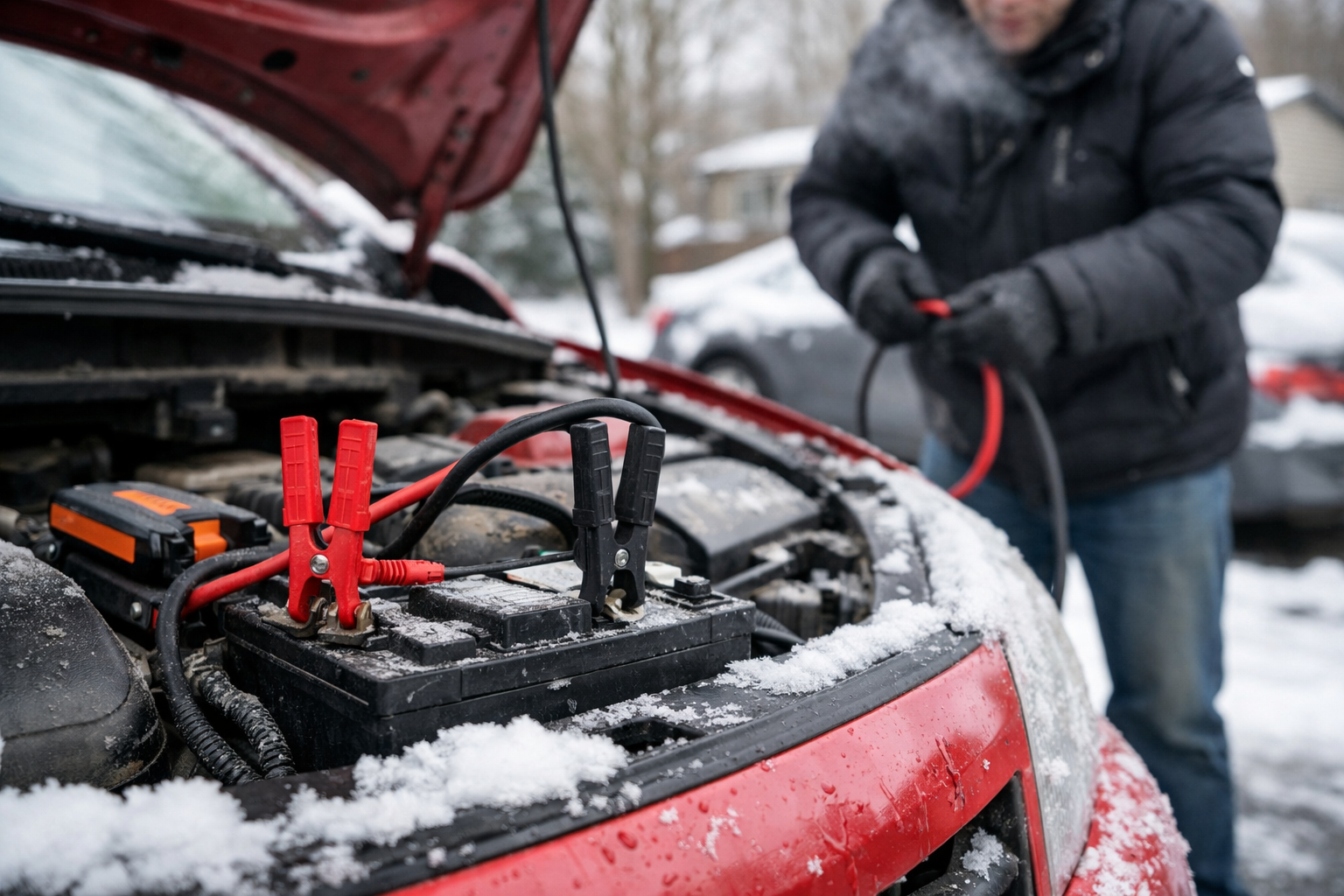
Corrosion creates another restriction. White or blue-green deposits on the terminals increase resistance and limit current flow between the battery, starter and charging system. Even a sound battery can struggle if connections are dirty or loose, much like the wrong tyre load index can leave a car outside its designed limits.
Charging faults make the problem worse. A worn alternator, slipping auxiliary belt or failing voltage regulator may leave the battery undercharged after each drive. Check charging voltage with the engine running; most 12-volt systems should sit around 13.8 to 14.4 volts. If readings fall outside that range, winter starting problems often continue until the fault is repaired.
How to Test a Weak Battery, Alternator and Starter System
A weak battery can look like a starter or alternator fault, so test all three before replacing parts.
Use a digital multimeter first. After the engine has been off for several hours, a healthy battery should read about 12.6 volts. Around 12.4 volts suggests a partial charge, while below 12.2 volts points to a weak or discharged battery. During cranking, voltage should usually stay above 9.6 volts. A sharp drop suggests poor cold-start power.
Then check charging voltage at idle. Most cars should show about 13.7 to 14.7 volts across the battery terminals. If the reading stays near resting voltage, the alternator may not be charging properly. A single click, slow crank or grinding noise can point to starter trouble, poor cable connections or high resistance.
Avoid testing straight after a drive, because surface charge can distort the reading. Do not judge battery condition by dashboard lights alone. If results are unclear, ask a garage for a proper load or charging-system test.
Steps to Prevent Winter Battery Drain and Avoid a No-Start
Reliable winter starts depend on a full battery, clean terminals and fewer electrical loads left running. Cold weather weakens battery performance, so small habits matter more once frost arrives.
Drive long enough to replace the power used during starting, especially after repeated short trips. If the car sits for several days, use a smart charger or maintainer. Park in a garage if possible, since slightly warmer conditions help the battery deliver current more easily.
Switch off heated seats, the rear screen heater, interior lights and phone chargers before turning the engine off. Check that boot and glovebox lights are off, make sure the clamps are tight, and replace an ageing battery before winter rather than after the first no-start.
Keep breakdown risk in mind as well. A flat battery can leave you stranded in poor weather, and a puncture can make recovery harder. Carrying the right emergency kit, including the option to Buy a Space Saver Spare wheel, reduces disruption when winter exposes more than one problem at once.
Frequently Asked Questions
Why does cold weather make a car battery lose power more quickly?
Cold weather slows the chemical reaction inside the battery, so it produces less current. At the same time, the engine needs more power to start because oil thickens and internal resistance rises. This combination makes weak or ageing batteries fail much faster in winter.
What are the most common reasons a car battery keeps dying in winter?
Cold weather often exposes an existing weakness rather than causing the failure on its own. The most common reasons are an ageing battery, reduced cranking power in low temperatures, short trips that do not fully recharge it, and high electrical demand from heaters, lights and demisters. Corroded terminals or a faulty alternator can also drain charge.
How can you tell whether a winter battery problem is caused by the battery, alternator, or starter?
Test voltage first with a multimeter. A healthy battery should read about 12.6V with the engine off and roughly 13.7-14.7V while running; lower running voltage points to the alternator.
If the engine cranks slowly or only clicks, the battery or starter is more likely. Bright dash lights with a single click often suggest the starter, while dim lights and weak cranking usually indicate the battery.
How long should a car battery last before winter conditions start causing failures?
Once a battery drops below about 50% of its original cranking power, cold weather often exposes the weakness. Most car batteries last 3 to 5 years, but winter failures become more common after year 3. Short trips, low temperatures, and poor charging can shorten that range.
What can you do to stop your car battery from dying during cold winter months?
At 0°C, a car battery can deliver far less power than it does in mild weather. Keep it charged with regular drives or a smart charger, and clean any corrosion from the terminals. If the battery is over three to five years old, test it before winter and replace it if its output is weak.