

Driving in Europe requires compliance with country-specific rules on spare wheels, breakdown equipment and mandatory items carried in the vehicle. These requirements vary by destination, vehicle type and whether local law demands repair kits, warning devices or high-visibility clothing. This guide outlines what drivers need to check before travel, where rules differ across Europe, and which items help avoid fines, delays and roadside safety risks.
Key takeaways
- Check each country’s spare wheel rules before travel, as requirements vary across Europe.
- Carry a warning triangle, high-visibility jacket and basic safety kit in the car.
- Confirm whether a puncture repair kit is accepted where a full-size spare is not required.
- Review breakdown cover terms for European travel, including towing, roadside repair and repatriation.
- Keep essential documents accessible, including driving licence, insurance papers and vehicle registration.
- Inspect tyres, lights and fluid levels before departure to reduce breakdown risk abroad.
Spare wheel rules in European countries: what is required and where repair kits are accepted
Check your destination country’s equipment rules before you leave, then match your car’s puncture setup to those rules. European countries do not apply one single standard, and roadside checks can focus on whether the vehicle carries legally required safety equipment rather than whether it has a full-size spare.
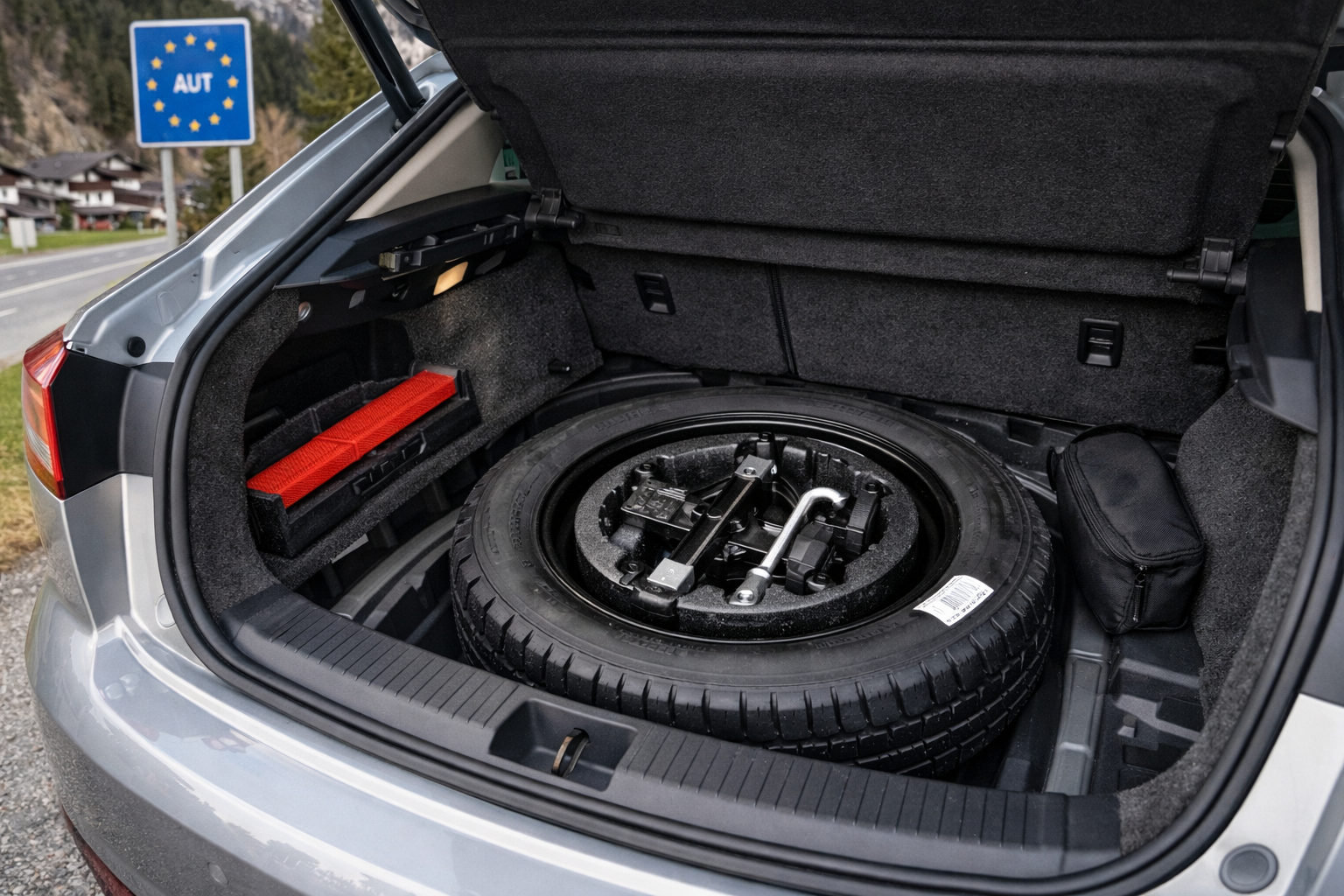
Most countries do not require a spare wheel by name if the car is fitted with an approved alternative, such as a manufacturer-supplied repair kit or run-flat tyres. The key point is roadworthiness. If a puncture leaves the car unsafe to continue, a sealant kit may not solve the problem, especially after sidewall damage, a blowout or a torn tyre.
Tyre incidents on the UK Strategic Road Network (motorways & A-roads) rose by 31% in just two years — accounting for 47.6% of all highway breakdowns. Tyre problems are the single largest breakdown category, making a reliable spare or repair solution essential before any European road trip.
That is why many drivers still carry a usable spare even where a repair kit is accepted. It reduces delay, avoids reliance on sealant that can fail, and helps in areas where breakdown recovery may take longer. Check the rules published by the Your Europe portal and confirm country-specific motoring advice with the relevant national authority or automobile club before departure.
Breakdown and warning equipment laws: triangles, high-visibility jackets and roadside safety rules
Missing warning equipment can lead to on-the-spot fines, and a poor roadside stop creates a bigger risk than the breakdown itself. Carry a warning triangle, one high-visibility jacket kept inside the cabin, and a basic lighting kit before crossing any border. These cover common legal checks and help you leave the vehicle safely on a hard shoulder or verge.
Breakdown rules often focus on visibility and scene protection, not just the fault. Some countries require occupants to wear a high-visibility jacket before stepping onto the road. Others set rules for triangle placement or ban their use in certain situations. Check Your Europe and each country’s motoring authority before departure, as guidance can change.
| Country | Warning Triangle | Hi-Vis Vest | First Aid Kit | Notes |
|---|---|---|---|---|
| France | ✅ Required | ✅ Required (all occupants) | ❌ Not mandatory | Breathalyser also required by law |
| Spain | ✅ Required (1 for foreign vehicles) | ✅ Required (motorways & busy roads) | ❌ Not mandatory | Vest must be kept in passenger cabin; fines up to €200 |
| Italy | ✅ Required | ✅ Required | ❌ Not mandatory | Police collect 25% of max fine from foreign drivers on the spot |
| Germany | ✅ Strongly recommended (mandatory for German vehicles) | ✅ Required (German-registered vehicles) | ✅ Required (German vehicles) | Foreign drivers should carry both; on-the-spot fines possible |
| Portugal | ✅ Required | ⚠️ Advised (mandatory for residents) | ❌ Not mandatory | Officials have been known to fine foreign drivers without a vest |
| Belgium | ✅ Required | ❌ Not mandatory | ❌ Not mandatory | Headlamp beam deflectors also required |
Source: Start Rescue — Compulsory Equipment in Europe; Extradeon EU Equipment Guide (2025)
Manufacturer emergency kits in newer vehicles do not replace legally required warning items. Campervans and heavily loaded touring vehicles need extra planning, especially when stored gear is hard to reach. Review why every campervan conversion should include a spare wheel plan, and keep safety equipment within reach of the driver’s door.
Documents and driving essentials to carry when taking a car abroad in Europe
Border checks and roadside inspections often fail on paperwork, not the car. Carry the original driving documents, keep them easy to reach, and check that every name, registration number and policy detail matches before departure.
The core set is simple: a full UK driving licence, the vehicle log book or V5C, and motor insurance documents confirming European cover. If the car is leased, financed, borrowed or hired, carry written authorisation or the rental agreement in the car.
Several countries also expect proof of identity, so carry a valid passport. If the vehicle is not registered in your name, that can trigger extra checks after a stop, collision or ferry inspection. The UK Government guidance on driving abroad lists the standard documents, while insurers set territorial limits and exclusions for each policy.
Store paper originals in a waterproof folder and keep digital copies separately as backup. They will not replace originals where officials require them, but they can speed up replacement, claims handling and contact with your insurer or breakdown provider.
Country-specific items drivers may need, from headlamp beam deflectors to emissions stickers
Headlamp beam adjustment is easy to miss before driving from the UK into continental Europe. UK cars dip left, so use beam deflectors or a built-in setting to avoid glare for oncoming traffic. Fit them before boarding, then test low beam and check the deflectors match the lamp shape shown by the maker.
Check each country on your route for local access rules. France often requires a Crit’Air emissions sticker for low-emission zones, and several German cities use the Umweltplakette. For winter travel, confirm if local law requires winter tyres or snow chains during certain months or when signs require them.
Order stickers only from official schemes, allow time for delivery, and place them as instructed. Check whether your car can switch headlamps through the vehicle menu before buying deflectors, since some models hide tourist mode in the infotainment system.
Common mistakes include buying unofficial emissions labels, fitting beam stickers upside down, and assuming one city pass covers another country. Before departure, do a final walk-round covering lights, windscreen permit placement, and any seasonal equipment needed for the route.
How to prepare your vehicle before a European road trip to avoid fines, delays and roadside problems
Good preparation cuts the chance of a roadside stop turning into a missed ferry, a recovery call or a fine for an unroadworthy car. Check tyre pressures against the loaded-car setting in the handbook or on the door sticker, then inspect tread, sidewalls and valve stems on every tyre, including the spare. A space saver that has lost pressure or aged badly can fail when needed, so use this Space Saver Spare Maintenance Checklist before departure.
Test the battery, lights, wipers and washer system a few days before travel, not on departure morning. Long motorway runs, night driving and wet weather expose weak batteries, failed bulbs and worn blades fast. If the car uses a locking wheel nut, confirm the key is in the vehicle and fits your socket set.
Book overdue servicing and check fluid levels with the engine cold where required, especially oil, coolant and screenwash. Confirm the jack, wheel brace and towing eye are present and fit the car. Finish with a short local drive after packing; extra load can change tyre pressure needs, braking feel and headlamp aim.
Frequently Asked Questions
Do I need to carry a spare wheel when driving in Europe?
No. Most European countries do not legally require a spare wheel in a private car. Your vehicle must still be roadworthy, so carry a usable alternative such as a repair kit or space-saver if your car was supplied with one, and check local rules for breakdown equipment before you travel.
What warning equipment must I carry in my car when driving in European countries?
Rules vary by country, so there is no single Europe-wide kit. A warning triangle is widely required, and several countries also require a high-visibility jacket for the driver or all occupants.
- Warning triangle
- High-visibility jacket or vests
- Headlamp beam deflectors, if needed
What are the breakdown and roadside safety rules for drivers in Europe?
Move your vehicle to a safe place, switch on hazard lights, and get everyone behind a barrier if one is available. Most European countries require a warning triangle, and some also require high-visibility jackets for anyone leaving the vehicle. Use emergency lanes only for breakdowns, and follow local rules before calling roadside assistance.
Are high-visibility jackets and warning triangles required in every European country?
Requirements vary by country, so there is no single rule across Europe. Many countries require at least one high-visibility jacket and a warning triangle, but some set different rules for where they must be stored or when they must be used.
Check the rules for every country on your route before you travel.
What documents and emergency items should I carry when driving in Europe?
At minimum, carry 5 core documents: your full driving licence, V5C logbook, motor insurance certificate, passport, and travel insurance details. Keep them easy to reach at border checks or after a breakdown.
Pack key emergency items separately: a warning triangle, high-visibility vest, first-aid kit, spare bulbs where required, and a spare wheel or repair kit if your car uses one.


