Replacement costs for shocks and struts include the price of the parts, labour for installation, and any related wheel alignment or suspension work. Costs vary by vehicle make, model, axle location, and whether the repair involves shocks, struts, or complete assemblies. This article explains typical cost factors, signs that replacement may be due, and how labour and parts affect the final bill.
Key takeaways
- Push down each vehicle corner and check tyres for uneven wear before pricing replacement parts.
- Worn shocks and struts reduce braking stability, cornering grip, ride comfort and steering control.
- Price the job by vehicle model, axle and part type before booking any suspension work.
- Labour costs rise when suspension stripping, corroded fasteners or wheel alignment are required.
- Small hatchbacks often cost less because they use simpler shocks and shorter labour times.
- Compare quotes using the same scope: axle, assemblies, top mounts, alignment, labour and VAT.
What Shocks and Struts Do and Why Replacement Becomes Necessary
Check each corner of the vehicle for bouncing after a firm push and inspect the tyres for uneven wear before pricing parts. Those signs often show that the dampers no longer control spring movement properly, which affects braking stability, cornering grip and ride comfort.
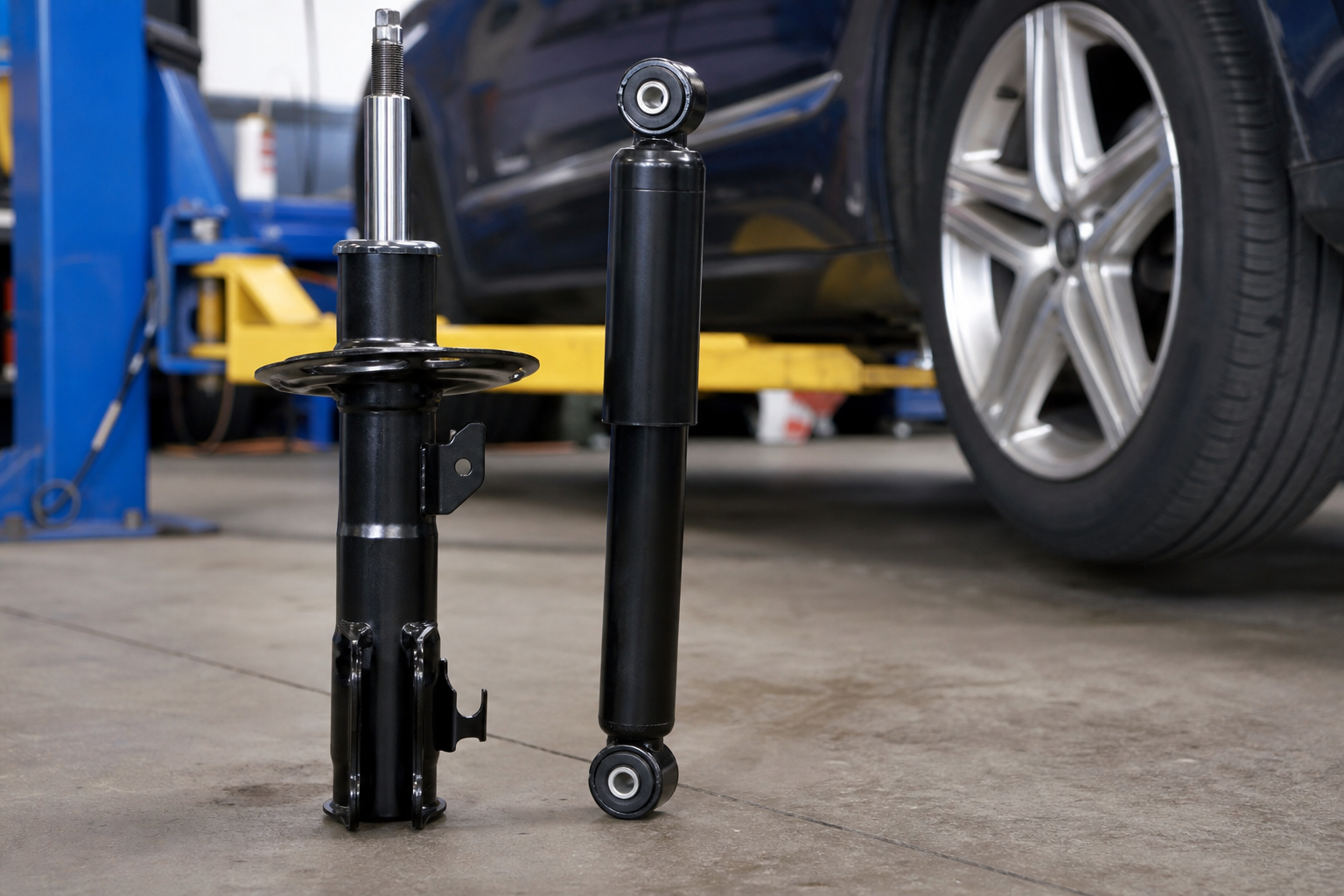
Shocks and struts both limit repeated body motion, but struts also form part of the suspension structure. That extra role means worn struts can alter wheel alignment, while weak shocks mainly reduce damping performance. Internal seals, valves and hydraulic fluid wear down over time, and road salt, potholes and heavy loads speed up that decline.
Replacement becomes necessary when the suspension cannot keep the tyres planted consistently on the road. At that point, stopping distances can increase on rough surfaces, steering can feel loose, and tyres may wear faster. Many manufacturers and safety bodies, including the NHTSA, treat persistent leaks, knocking and poor control as clear service indicators.
The Main Factors That Affect Shock and Strut Replacement Costs
| Cost factor | How it affects the price |
|---|---|
| Number of corners replaced | Replacing all four costs far more than changing one worn unit. |
| Part type | Complete strut assemblies usually cost more than bare shocks or struts. |
| Labour complexity | Costs rise when the suspension must be stripped down or fasteners are corroded. |
| Alignment | An alignment check may be needed after fitting, adding to the bill. |
| Vehicle specification | Electronic, performance or brand-specific suspension parts usually cost more. |
| Related components | Mounts, bearings, boots and bump stops can increase the total if worn. |
Replacing all four corners costs far more than changing one worn unit, and complete strut assemblies raise the total again. The most reliable way to estimate the bill is to price the job by vehicle model, axle, and part type before booking.
Replacement costs come from more than the damper itself. Labour time rises when the suspension must be stripped down, fasteners are corroded, or alignment is needed after fitting. Parts prices also vary between OEM components, aftermarket brands, and vehicles with electronic or performance suspension. Strut mounts, bearings, boots, and bump stops can add further cost if inspection finds wear.
Complete strut assemblies often make sense when several related parts are tired, since they reduce fitting complexity. Bare shocks or struts fit better when the springs and mounts remain serviceable and the goal is to keep parts costs lower.
Average Parts and Labour Costs for Different Vehicle Types
A single “average” figure often misleads because vehicle class changes both part price and labour time. Judge cost by grouping the job into small cars, family saloons, SUVs and 4x4s, then checking whether the vehicle uses a simple shock absorber or a full strut assembly.
Parts costs rise as suspension components become larger or more complex. Small hatchbacks usually cost less because standard oil-filled shocks and basic mounts are widely available. Family cars cost more, while SUVs, pickups and premium models often need stronger dampers, taller struts or brand-specific assemblies.
Labour follows the same pattern. Rear shocks on simpler layouts can be changed quickly, but front struts on larger vehicles take longer because the technician must strip the suspension, transfer hardware on some setups and check alignment after refitting.
Compact cars usually carry the lowest combined bill, mid-size vehicles sit in the middle, and larger or premium vehicles cost the most once parts, labour and alignment are added together.
Signs of Worn Shocks or Struts and When to Schedule Service
Book an inspection soon after the vehicle starts pitching under braking, squatting under acceleration or feeling unsettled over small bumps. Worn dampers often show up as longer stopping distances, extra body roll in bends, steering wander and a dull knocking noise from the suspension area. If one corner sits lower than the others or the car feels unstable in crosswinds, move the check higher up the priority list.
Confirm the problem with a simple routine. Inspect each shock or strut body for oil leaks, damaged mounts and dented housings. Review the last MOT history for suspension advisories, then ask a garage to check damper performance, top mounts, springs and alignment together. Schedule service promptly after a hard pothole strike, kerb impact or any sudden change in ride quality.
Do not wait for a complete failure or replace only the visibly worst unit on an axle. Mixing old and new dampers can upset handling and braking balance. It also helps to rule out tyre pressure, worn bushes and broken spring seats before authorising parts.
How to Compare Repair Quotes and Control Replacement Costs
A clear quote lowers the risk of paying twice for the same suspension work and helps you spot parts or labour that should already be included. Ask each garage to price the same scope: axle or full set, shock or complete strut assembly, top mounts if needed, wheel alignment, and VAT.
Labour can vary as much as parts. One quote may include complete assemblies that fit faster, while another uses separate components with more bench work. Neither is wrong, but a lower price can rise once worn mounts, seized fasteners, or alignment are added after dismantling.
Check the part brand, warranty length, and whether the estimate lists OEM-equivalent or budget components. Reputable manufacturers such as KYB and Monroe offer lines at different price points. The best quote shows full parts detail, realistic labour time, and likely extras before the job starts.
Frequently Asked Questions
How much does it usually cost to replace shocks and struts?
Replacing shocks or struts usually costs £200 to £1,200, depending on the vehicle and whether you replace two or all four. Shock absorbers often cost less than struts. Labour, parts quality, wheel alignment, and suspension design can raise the total.
What factors affect the replacement cost for shocks and struts?
Struts usually cost more than shocks because they support the suspension structure and take longer to replace. Vehicle make and model also change the price, especially for luxury, performance, or 4×4 systems.
Parts quality, whether you replace two or all four units, local labour rates, and the need for a wheel alignment can all raise the final bill.
Is it cheaper to replace shocks and struts in pairs or all at once?
Replace them in pairs on the same axle. That keeps damping even, helps tyre wear, and preserves stable braking and handling.
Replacing all four at once costs more upfront, but it can cut labour overlap and restore balanced ride quality if the whole set is worn.
Does labour cost vary for shock and strut replacement by vehicle type?
Access is the main factor. Labour usually costs more on SUVs, luxury models, and vehicles with complex suspension because parts take longer to reach and remove.
Compact cars often cost less to service. Strut replacement also tends to cost more than shock replacement, since it often involves extra disassembly and wheel alignment.
How can you tell when shocks or struts need replacing?
50,000 miles is a common inspection point for shocks and struts. If ride quality has worsened by then, wear may already be affecting control and braking.
Replace them when you notice excessive bouncing, nose-diving under braking, uneven tyre wear, fluid leaks, or clunking over bumps. A mechanic can confirm the fault during a suspension check.