Hit-and-run car accidents differ from regular accidents because one driver leaves the scene without stopping to exchange information or help injured people, which can create separate civil and criminal issues. Regular accidents usually involve both drivers remaining at the scene, reporting the crash, and cooperating with insurers and police as required. This article explains the legal differences, how fault and evidence are handled, and what steps can help protect a claim after a hit-and-run.
Key takeaways
- Stop when safe, check injuries, and exchange names, addresses, owner details, and registration numbers.
- If anyone is injured or details are not exchanged, report the crash within 24 hours.
- Untraced driver claims are often logged as fault claims until your insurer recovers losses.
- Send photos, witness details, dash-cam footage, repair estimates, and police references to your insurer promptly.
- Secure evidence fast, since CCTV may overwrite footage and weather can erase tyre marks.
- Record registration details, even partial plates, plus make, model, colour, lighting damage, and direction.
- Get medical care first, then keep treatment, travel, repair, and lost earnings records.
Immediate Legal Duties After a Crash and What Changes in a Hit-and-Run
| Issue | Regular crash | Hit-and-run |
|---|---|---|
| Stopping at the scene | Drivers stop when safe and check for injuries. | The other driver leaves, creating a separate failing to stop issue. |
| Exchanging details | Name, address, vehicle owner details and registration are exchanged. | Shared details are missing, so the remaining driver must preserve evidence quickly. |
| Police reporting | If someone is injured, or details are not exchanged, the crash must be reported as soon as possible and within 24 hours. | The same deadline applies, but reporting becomes more important because the other driver is untraced. |
| Insurance position | Claims usually proceed against the known driver or insurer. | Claims may involve your own insurer first and potentially the Motor Insurers’ Bureau if the driver is unknown or uninsured. |
| Key early evidence | Photos and driver details usually support the claim. | Photos, dash-cam footage, witness names, time, location and any part of the registration become critical. |
Stop when it is safe, check for injuries, and exchange details with the other driver. UK law requires drivers in a crash to give their name and address, the vehicle owner’s details, and the registration number to anyone with reasonable grounds to ask. If someone is injured, or those details are not exchanged at the scene, report the crash to the police as soon as possible and within 24 hours under the Road Traffic Act 1988, section 170.
A hit-and-run changes the legal and insurance position at once. The fleeing driver may face separate offences for failing to stop and report, while the remaining driver often must prove the other vehicle was involved without shared details. Early evidence is critical: photographs, dashcam footage, witness names, time, location, and any part of the registration.
Insurers still expect prompt notice, even when the other driver cannot be identified. If the at-fault driver remains unknown or uninsured, compensation may go through the Motor Insurers’ Bureau, which has its own evidence and reporting rules.
How Fault, Liability and Insurance Claims Work When the Other Driver Leaves
When the other driver cannot be identified, your insurer will often record the claim as a fault claim until it recovers its losses. That can affect your excess, your no-claims discount, and later premiums, even when you did nothing wrong.
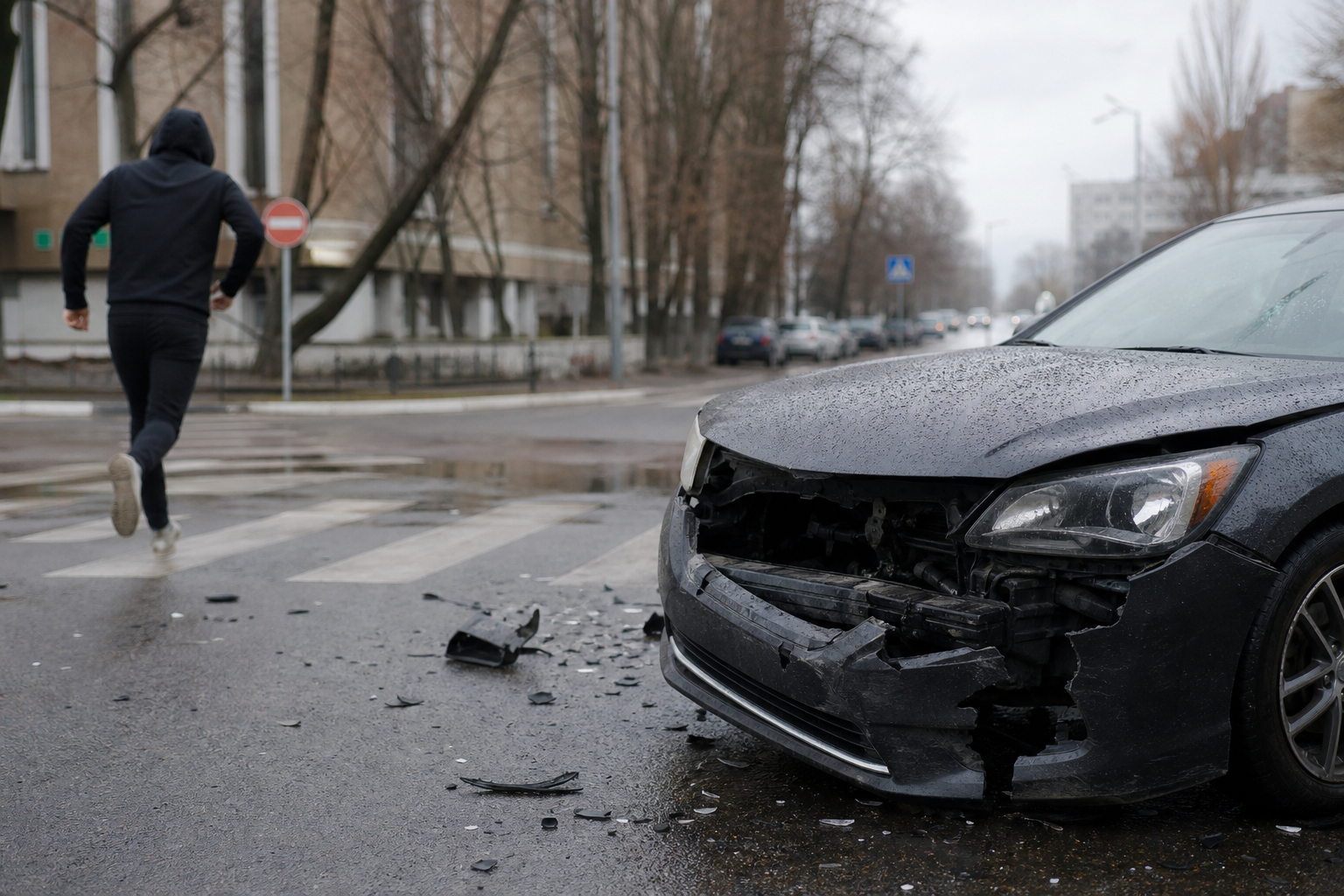
The strongest route is to notify your insurer promptly and give clear evidence that supports an untraced driver claim. Photos, witness details, dash-cam footage, repair estimates, and the police reference help the insurer assess fault and may support a claim through the Motor Insurers’ Bureau, which handles claims involving uninsured and untraced drivers in the UK.
This approach works best because liability is harder to dispute when the other driver has left and cannot give an account. If the driver is later identified, the claim can shift into the usual insurance process against that driver or their insurer. Where evidence is weak, insurers may still pay for repairs under your own policy first, then review recovery if new information appears.
Evidence That Matters Most in Hit-and-Run Accident Investigations
Time works against the evidence in a hit-and-run. CCTV systems often overwrite footage within days, weather can blur tyre marks, and damaged parts may be repaired or discarded before anyone records them properly.
Investigators usually build the case from items that can identify the vehicle or confirm its movement. Clear images of the registration plate matter most, but partial plates, make, model, colour, lighting damage, paint transfer, broken trim, and wheel or tyre patterns can still narrow the search. Road surface marks, debris spread, and impact height help reconstruct speed, direction, and point of contact. If available, dash-cam files, telematics data, and nearby automatic number plate recognition records add a timed route.
Mechanical detail can strengthen that picture. Tyre condition, tread pattern, and even tyre age may help distinguish one vehicle from another when footage is weak. The strongest file links physical damage, timestamped media, and location data into one consistent sequence.
Criminal Penalties and Civil Consequences Unique to Hit-and-Run Cases
Leaving the scene can trigger a criminal case before anyone proves who caused the crash. In England, Scotland and Wales, failing to stop or report under the Road Traffic Act 1988, section 170 can bring penalty points, a fine, disqualification, and in serious cases imprisonment.
Treat the matter as two linked cases. Meet the police deadline, keep every notice and insurer letter, and get legal advice quickly if officers request an interview or charge you. Civil liability runs separately, so compensation, uninsured losses, and recovery action can continue even if the criminal case remains unresolved.
Do not assume a later report cancels the offence or confuse it with careless driving or speeding. Courts assess failure to stop or report on its own facts. A common mistake is admitting details before checking the timeline, location, and what was actually exchanged at the scene.
Steps to Take After a Hit-and-Run to Protect Your Health, Claim and Case
Health records, repair records and vehicle condition can change within hours, so act in that order. Get a medical assessment even if symptoms seem minor, since neck pain, concussion and soft-tissue injuries often appear later. Keep discharge notes, prescriptions, travel costs and time off work, as these support treatment and compensation. Then photograph every damaged panel, wheel, light and broken trim before cleaning, moving or repairing anything.
Keep the car in its post-collision state until your insurer, solicitor or engineer has enough evidence. If the vehicle is unsafe to drive, fit a replacement Tyre only after recording the original damage and keeping the invoice. If the registration plate is cracked, bent or unreadable, Replace Damaged Number plates after taking clear photos. Consistent records help close gaps insurers and defence teams often challenge.
Frequently Asked Questions
What legally defines a hit-and-run car accident compared with a regular car accident?
A hit-and-run happens when a driver leaves the scene without stopping, sharing details, or giving reasonable help if someone is injured. A regular car accident involves staying at the scene and meeting those legal duties. The key legal difference is not the crash itself, but the driver’s failure to remain and report it as required.
How does fault investigation differ when the at-fault driver leaves the scene?
The key difference is that investigators must prove both the collision and the missing driver’s identity. Without an on-scene admission or exchange of details, they rely more on witness statements, CCTV, dashcam footage, vehicle debris, paint transfer, and mobile phone or location records. Police involvement is often more central than in a regular crash.
What steps should be taken immediately after a hit-and-run accident?
Move to safety and call emergency services at once. Prompt medical checks protect your health, and a police report helps document the driver’s flight. Record the vehicle’s make, model, colour, direction of travel, damage, and any witnesses, then notify your insurer quickly.
How can insurance claims change after a hit-and-run car accident?
If the other driver cannot be identified, the claim often shifts to your own uninsured motorist, collision, or personal injury protection cover, depending on your policy and state law. Insurers may ask for faster reporting and stronger proof. Deductibles, payout limits, and fault disputes can also change.
What penalties can a driver face for leaving the scene of an accident?
Leaving the scene can bring fines, licence points, suspension, and even jail time. Penalties rise sharply when someone is injured or killed.
For the reader, that means a hit-and-run charge often carries harsher consequences than the crash itself, along with higher insurance costs and possible civil liability.