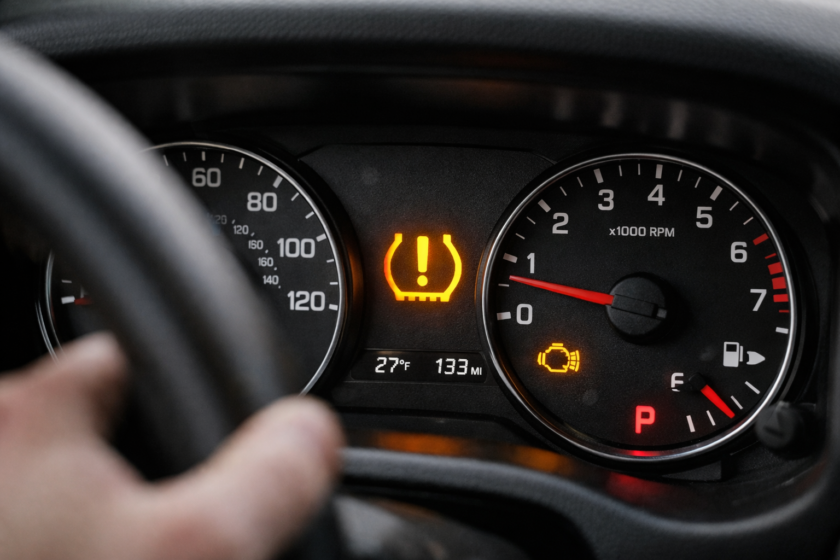
A tyre pressure warning light stays on when the car detects low tyre pressure or a fault in the tyre pressure monitoring system (TPMS). The cause can be a genuine pressure drop, a slow puncture, a mismatched tyre size, temperature changes, or a sensor and reset issue after inflation or tyre work.
This guide lists nine fixes, starting with pressure checks and leak checks, then moving to TPMS reset steps by method (button reset, menu reset, and drive-cycle relearn). It also covers common sensor problems, valve damage, and when a diagnostic scan is needed.
Key takeaways
- Set all tyres to the door-jamb PSI, then drive 10–20 minutes.
- Use the TPMS reset button method: ignition on, hold until light blinks.
- Use the infotainment reset method: open TPMS menu and confirm recalibration.
- After rotating tyres, relearn sensor positions with a scan tool or relearn drive.
- Check the spare tyre pressure if the vehicle monitors a full-size spare.
- Replace the TPMS sensor battery or sensor if the light flashes, then stays on.
- Fix slow leaks at valve stems or bead seats; the light returns after refilling.
Confirm the tyres are set to the door-jamb pressure (and check when cold)
Set all four tyres to the door-jamb pressure using a reliable gauge, then recheck after the car has sat for at least three hours. The TPMS light often stays on when one tyre sits a few psi below the placard value, even if the tyre looks fine.
Use the pressure listed on the driver’s door-jamb sticker, not the number moulded into the tyre sidewall. The sidewall figure is the tyre’s maximum rating, while the placard reflects the vehicle’s load, suspension, and handling targets. Measure “cold” because driving heats the air inside the tyre and raises the reading, which can hide an underinflation problem that returns overnight.
Adjust pressures in small steps and refit valve caps to reduce slow leaks. If the light remains on after correcting pressures, drive for 10–20 minutes at normal speeds so the system can see the updated values; some cars only refresh after a short drive cycle.
Inspect for a slow puncture, bead leak, or valve stem problem
A slow leak can drop a tyre by 1–3 psi per day, enough to keep the warning light on even after you inflate it.
Find the leak source, then inflate and recheck. Spray soapy water on the tread, sidewalls, valve stem, and valve core. Growing bubbles show escaping air. Check the bead where the tyre meets the rim; corrosion, old sealant, or a slightly bent wheel can cause seepage without a clear puncture.
This fixes the pressure loss. A TPMS reset only clears the symptom, and the light returns once pressure drops. If you find a nail or screw, a tyre shop can advise if a repair is safe based on location and size.
If the leak is at the valve stem or core, replacement is quick and low-cost. If the wheel is damaged or you need a temporary spare while you book a repair, Road Hero Spare Wheel kits can help you avoid relying on sealant.
Rule out a faulty pressure reading: gauge accuracy and temperature swings
Do not trust the dashboard reading alone; a small gauge error or a normal temperature swing can keep the light on even when the tyres look correctly inflated.
TPMS (tyre pressure monitoring system) triggers when a sensor reports pressure below its threshold. If the handheld gauge reads 2–3 psi high, the tyre can still sit under the trigger point after you “top it up”. Temperature adds another layer: pressure drops as the tyre cools, so a set done in a warm garage can fall below the threshold outside.
Check each tyre with a known-accurate gauge, then compare it against a second gauge to confirm the reading. If the numbers disagree, replace the suspect gauge or use a calibrated inflator at a tyre shop. Recheck pressures when the tyres are cold and the car has been parked for several hours, then adjust to the door-jamb placard value.
Once the sensor sees stable, correct pressure across all tyres, the warning light usually clears after a short drive cycle.
Check the spare tyre (if monitored) and any recent tyre or wheel changes
A TPMS light can stay on even when the four road tyres are correct if the system also monitors the spare, or if a sensor was disturbed during wheel or tyre work.
Check the spare first if the vehicle has a full-size spare or a sensor inside the spare wheel. Inflate it to the door-jamb pressure, then drive for 10–15 minutes so the system updates. If the vehicle uses a space-saver spare without a sensor, focus on recent work.
If tyres, wheels, or sensors were changed, confirm the correct sensors were refitted and each sensor was programmed (or “learned”) to the car. Some vehicles need a relearn after rotation, sensor replacement, or fitting a second wheel set. Follow the owner’s manual or manufacturer instructions.
Do not ignore the spare, assume new tyres clear the warning, or fit incompatible aftermarket sensors. If the light started right after wheel work, book a TPMS relearn and sensor scan instead of repeatedly adding air.
TPMS reset steps by method: button reset, infotainment menu, relearn drive cycle, and scan tool
A correct TPMS reset clears the warning light, updates the system’s stored sensor IDs, and restores accurate low-pressure alerts after inflation or tyre work. Most vehicles will not switch the light off until the control module receives a valid, stable reading from each sensor, which can take a few minutes of driving.
Start with the factory reset method for the vehicle. Many cars use a physical TPMS button under the steering column or in the glovebox: switch the ignition on, hold the button until the light flashes, then start the engine and wait for the system to relearn. Other models route the reset through the infotainment menu (often under Vehicle Settings > Tyres > Set/Calibrate); the menu command tells the module to treat current pressures as the new baseline.
If the vehicle uses a relearn drive cycle, drive at a steady speed on clear roads until the sensors transmit and the module confirms all four positions. Some systems need a scan tool to trigger each sensor in sequence at the valve stem; tyre shops use tools from Autel and ATEQ for this. When a reset fails twice, suspect a sensor battery, a mismatched sensor type, or a module fault rather than repeating the same steps.
Diagnose TPMS hardware faults: dead sensor batteries, damaged sensors, and when to book a garage
Book a garage visit if the TPMS light stays on after correct pressures, a confirmed leak check, and the proper reset for the vehicle. At that point, a hardware fault becomes the most likely cause, and a scan tool can confirm it quickly.
TPMS sensors sit inside the wheel and run on sealed batteries. When a battery weakens, the sensor may drop out, report intermittently, or trigger a warning even when pressures are stable. Many vehicles show a flashing TPMS light first, then a solid light, which often points to a system fault rather than low pressure.
Physical damage also keeps the light on. Tyre fitting can crack a sensor body, snap the valve stem on valve-mounted units, or leave corrosion on the sealing surface that causes slow air loss. After wheel changes, the car may also need sensor ID programming or a relearn if the new wheels use different sensors.
A garage can read each sensor’s ID, pressure, temperature, and battery status, then match readings to each wheel position. Ask for the fault codes and live data printout so the diagnosis is clear. If you want a deeper overview of how these systems work and what fails, see all you need to know about TPMS.
Frequently Asked Questions
Why does the tyre pressure light stay on after inflating the tyres to the correct PSI?
The light can stay on because the TPMS has not updated yet or a fault remains. Many systems need a short drive to relearn the new pressures, and some need a manual reset. The warning can also persist if one tyre is still low, the spare is low, or a sensor has a weak battery or has failed.
How do I reset the TPMS using the dashboard reset button on my vehicle?
The dashboard TPMS button resets the warning system; it does not inflate tyres. Set all tyres (and the spare, if monitored) to the door-jamb pressure first.
- Turn the ignition to ON (engine off).
- Press and hold the TPMS RESET button until the light blinks (about 3–10 seconds), then release.
- Start the engine and drive for 10–20 minutes for the system to relearn.
What TPMS reset steps apply when the car requires a relearn drive cycle after adjusting tyre pressures?
Set all tyres to the door-jamb pressure, then start the engine and drive at a steady speed (often 30–50 mph) for 10–20 minutes. The TPMS needs wheel-speed and sensor data over time to relearn the new baseline. If the light stays on, stop, recheck pressures when cold, and repeat the drive cycle.
Can a temperature drop trigger the tyre pressure light even if there is no puncture?
If the temperature drops sharply overnight, the tyre pressure light can come on without a puncture. Cold air reduces pressure inside the tyre, often pushing it below the TPMS threshold. Check pressures when tyres are cold, inflate to the door-jamb label, then drive a few minutes for the system to update.
When should I suspect a faulty TPMS sensor or low sensor battery if the tyre pressure light will not turn off?
If the light stays on after you set all tyres to the door-jamb pressure and drive 10–20 minutes, suspect the TPMS hardware. A single wheel showing no reading, a “—” value, or a pressure that jumps around points to a faulty sensor. If the warning returns within days with stable pressures, a low sensor battery is likely.