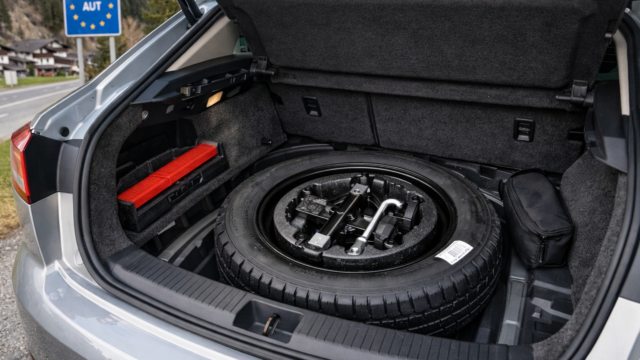
Tyres should be replaced when they show damage, cracking, bulges, or age-related deterioration, even if the tread depth remains legal. Age affects the rubber compound as well as the visible surface, so an older tyre can lose strength and grip before it looks worn out. This guide explains how to check a tyre’s age from the sidewall date code, how long tyres typically remain serviceable, and when replacement is the safer choice regardless of tread.
Key takeaways
- Check tyre age using the DOT or date code stamped on the sidewall.
- The last four digits of the code show the production week and year.
- Replace tyres that show cracks, bulges, flat spots or sidewall damage, regardless of tread depth.
- Low mileage does not prevent ageing; rubber hardens and degrades even when tyres look unused.
- Inspect spare tyres too, since they often age out before they wear out.
- Use tyre age alongside tread depth, condition and manufacturer guidance when deciding on replacement.
How tyre age affects safety even when tread depth still looks legal
Check the tyre’s date code before judging it by tread depth, because rubber can lose strength and grip long before the grooves wear out. A tyre may still meet the legal tread minimum and still be too old for safe use.
Age changes the tyre from the inside as well as the surface. Heat, oxygen, sunlight and long periods of standing all speed up the breakdown of the rubber compounds. As the material hardens, the tyre becomes less able to flex, grip the road and disperse heat under load.
That change affects braking, cornering and high-speed stability. Older tyres are also more prone to cracking in the sidewall and tread blocks, and the bond between internal layers can weaken over time. Damage of that kind is not always obvious during a quick glance on the driveway.
TyreSafe advises motorists to check any tyre over five years old at least once a year with a professional inspection. It also states that tyres aged ten years or more should be replaced, even if they have not reached the legal tread limit. That guidance reflects ageing risk, not just visible wear.
Manufacturers and vehicle makers may set stricter limits for certain vehicles, especially caravans, motorhomes and trailers, where long standing periods and heavy loads can accelerate deterioration. The UK Government’s vehicle safety guidance also stresses checking tyres for cuts, bulges, uneven wear and other defects, not tread depth alone.
Storage conditions make a clear difference. A tyre kept in strong sunlight, exposed to repeated temperature swings or left underinflated can age faster than one stored in cool, dry, stable conditions. Even a little-used spare is not exempt, since time and environment still affect the compound.
If a tyre is approaching six years old, inspect it more closely and ask a fitter to assess its condition during routine servicing. Replace it sooner if you find cracking, vibration, repeated pressure loss or any sign of distortion. Legal tread depth tells you how much rubber is left; tyre age helps tell you how much safety margin remains.
How to check a tyre’s age using the DOT code and sidewall markings
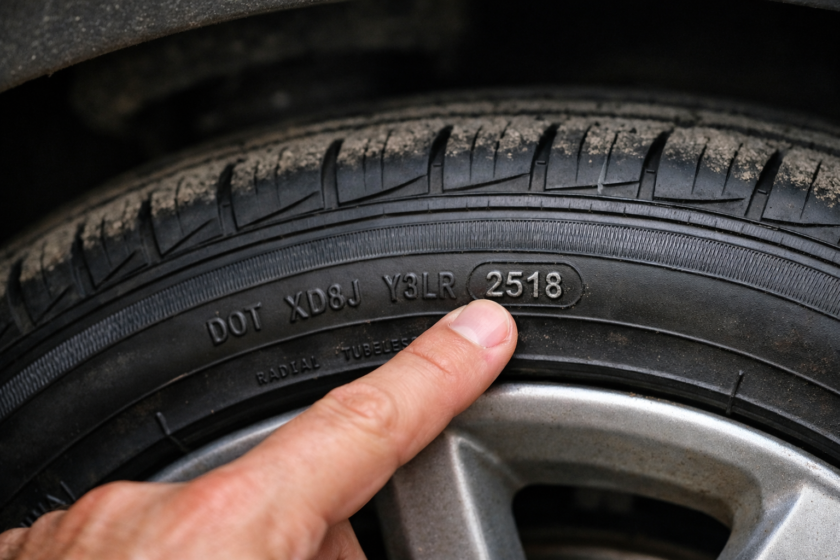
A four-digit date code shows in seconds whether a tyre is recent or already ageing. The most reliable check is the DOT code on the sidewall, because it gives the tyre’s week and year of manufacture.
Look for the letters “DOT” followed by numbers and letters. The final four digits show the build date: 1222 means the 12th week of 2022, while 4519 means the 45th week of 2019. If the code appears on only one sidewall, check the inner side as well.
Visual signs such as wear, storage marks and surface cracking do not show when the tyre was made. The date code does. Guidance from tyre makers such as Michelin and Continental also points owners to the sidewall date marking as the starting point for an age check.
Other markings still help. An E-mark confirms type approval, and the size, load index and speed rating confirm fitment, but none shows age. If the DOT date is missing, unreadable or appears buffed away, get a professional inspection and consider replacement.
When to replace tyres based on age, storage history and visible deterioration
| Tyre Age | Recommended Action | Authority / Source |
|---|---|---|
| 0–5 years | Standard monthly checks — pressure, tread depth and visual condition | AA & TyreSafe (2025) |
| 5+ years | Annual professional inspection as a minimum, even with good tread | TyreSafe guidance |
| 6 years | Have tyres assessed by a fitter; consider proactive replacement | Kwik Fit / industry consensus |
| 10+ years | Replace immediately regardless of tread depth or appearance | TyreSafe; UK Gov (HGV law from Feb 2021) |
| Any age (3-digit DOT code) | Replace immediately — tyre was manufactured before 2000 | Pete Barden / industry guidance |
Source: TyreSafe: Case for Action (2025)
Do not rely on tread depth alone when deciding if an older tyre should stay in service. Replacement should also reflect age, storage and visible damage, because rubber degrades at different speeds with heat, sunlight, ozone and long periods without use.
Check the manufacturing date, then review the tyre’s condition and history. TyreSafe advises regular checks once tyres are more than five years old and says tyres aged ten years or more should be replaced, even if the tread still appears usable.
Storage history affects risk. A tyre kept in a cool, dark, dry place will usually age more slowly than one left in sun, heat or outdoors for long periods. Even so, poor storage may leave few early signs, so visible condition should support the decision, not replace the age check.
Replace the tyre sooner if you find sidewall cracking, crazing between tread blocks, bulges, cuts, repeated pressure loss or vibration unrelated to balance. These signs point to structural decline, not simple wear. When age and deterioration overlap, replacement is safer than continued inspection.
Warning signs that mean a tyre should be changed regardless of mileage or tread
Replace the tyre at once if you see cracks, bulges, exposed cords or repeated pressure loss, even if tread depth still looks legal. These signs point to structural weakness, not normal wear, and can worsen quickly at speed.
Inspect the full sidewall, tread blocks and shoulder area in good light. Turn the steering to expose the front tyres, then check for splits, raised sections, deep cuts that reveal fabric or steel, and uneven wear such as edge wear or flat patches. If the tyre vibrates, loses air without a clear puncture, or shows damage after striking a kerb or pothole, have it checked by a qualified fitter. Guidance from TyreSafe and the DVSA supports prompt replacement of damaged tyres.
Do not dismiss fine sidewall cracking as cosmetic or assume a tyre is safe because only one area looks damaged. Avoid judging condition when the tyre is dirty or one side is hidden. If any defect exposes internal material, forms a lump, or returns after inflation, book replacement rather than another visual check.
Frequently Asked Questions
How old is too old for a tyre, even if the tread still looks good?
Replace a tyre at 10 years old at the latest, even if the tread looks fine. Most makers also advise annual inspections from year five, because rubber hardens and cracks with age. Heat, sunlight and long periods of standing can speed up that ageing.
How can you check a tyre’s age from the sidewall date code?
The key detail is the four-digit DOT date code, not the brand or tread pattern. The first two digits show the week, and the last two show the year of manufacture. For example, 2319 means the tyre was made in week 23 of 2019.
When should tyres be replaced regardless of remaining tread depth?
Replace tyres once they reach 6 to 10 years old, even if tread remains above the legal limit. Rubber hardens and weakens with age, which reduces grip and raises the risk of cracking or failure. Check the manufacturing date on the sidewall and follow any stricter limit set by the vehicle or tyre maker.
Does tyre age affect safety, grip and braking performance?
Even with deep tread, older tyres can lose grip and braking performance as the rubber hardens and cracks over time. Age also raises the risk of internal damage, especially after long exposure to heat, sunlight and under-inflation. Replace ageing tyres if inspection shows cracking, distortion or other signs of deterioration.
Do unused or spare tyres age even if they have not been driven much?
Yes. Rubber ages from the day a tyre is made, not from the day it starts rolling. Heat, sunlight, ozone and long periods of standing can harden the compound and cause cracking, so an unused or little-used spare still needs its date checked and may need replacing on age alone.