The numbers and letters on a tyre show its size, construction, load index and speed rating. Each part of the code gives a specific measurement or limit, including width, sidewall profile, wheel diameter, maximum load and approved top speed. This guide explains how to read each marking, what the figures mean, and how to check that a tyre matches your vehicle’s requirements.
Key takeaways
- Read tyre markings in sequence: width, profile, rim size, load index and speed rating.
- The first number shows tyre width in millimetres, measured from sidewall to sidewall.
- The profile number gives sidewall height as a percentage of the tyre width.
- The letter after the profile usually shows construction type, with R meaning radial.
- Rim diameter appears in inches and must match the wheel size exactly.
- Load index shows the maximum weight each tyre can carry when properly inflated.
- Speed rating marks the highest safe speed and should meet or exceed the manufacturer’s requirement.
Where to find tyre size, speed rating and load index on the sidewall
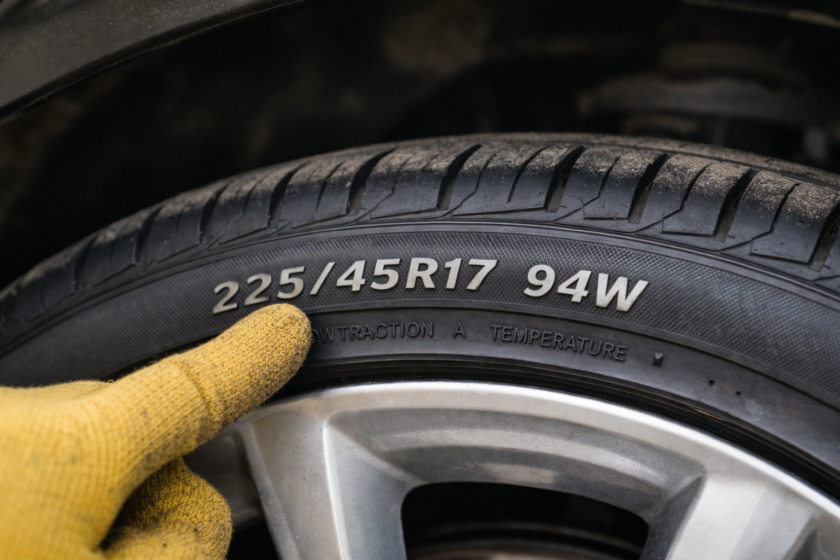
Check the outer sidewall for a raised string of letters and numbers before inspecting tread or pressure. That code gives the exact specification the vehicle was built to use. It usually appears in one line, such as 225/45 R17 94W, moulded into the rubber near the wheel rim.
The first number shows tyre width in millimetres. The second gives sidewall height as a percentage of that width. The next letter marks construction type, with R meaning radial, standard on modern road cars. The following number is wheel diameter in inches, so it must match the wheel exactly.
Two figures usually come after the size. The load index is a number linked to maximum weight capacity, while the speed rating is a letter showing the highest approved speed under load. Use the sidewall code with the vehicle placard, often inside the driver’s door shut or fuel flap, and confirm any replacement against guidance from the UK Government and the tyre maker.
How to read tyre size markings, from width and profile to rim diameter
Read the full tyre size code left to right. That helps you match tyres to the wheel, keep speedometer accuracy and avoid clearance issues. Check the complete sequence, not one number on its own.
After the width and profile, the construction letter and rim diameter finish the core fitment details. In 225/45 R17, R means radial construction, standard on modern passenger cars, and 17 is the wheel diameter in inches. The tyre must match that rim exactly. A 17-inch tyre will not fit a 16-inch or 18-inch wheel.
Start with the manufacturer’s stated size, confirmed in the handbook, fuel flap sticker or door shut label. Approved alternatives may fit on different trim levels or wheel packages, but rolling diameter still needs to stay within an acceptable range. For official guidance on tyre markings and legal fitment, check TyreSafe and the UK Government’s vehicle safety guidance.
What the speed rating letter means and how it affects tyre choice
| Speed Rating Letter | Max Speed (mph) | Max Speed (km/h) | Typical Use |
|---|---|---|---|
| H | 130 mph | 210 km/h | Saloons, family cars |
| V | 149 mph | 240 km/h | Sports & executive cars |
| W | 168 mph | 270 km/h | High-performance vehicles |
| Y | 186 mph | 300 km/h | Super & sports cars |
| T | 118 mph | 190 km/h | Standard passenger cars |
| S | 112 mph | 180 km/h | Standard passenger cars |
One common mistake is treating the final letter in the sidewall code as optional, even though it sets a hard performance limit. That letter is the speed rating. It shows the maximum speed the tyre can sustain under its specified load in controlled test conditions. In a code such as 94W, W is the speed rating.
The letter follows a standard scale, but not a simple alphabetical sequence. Common passenger car ratings include T, H, V, W and Y. A higher letter usually points to greater heat resistance and stability at speed, though it does not mean the tyre suits every vehicle or use.
Match the rating to the vehicle maker’s requirement in the handbook, fuel flap label or door shut sticker. Using a lower rating than specified can affect safety, insurance compliance and MOT suitability. A higher rating is often acceptable if the load index, size and other fitment details also match.
How to check the load index and match it to your vehicle requirements
The load index must meet or exceed your vehicle’s specified figure. A lower number cuts the weight the tyre can carry safely, even if the size and speed rating seem right.
Check the vehicle requirement, then match it to the number before the speed rating on the tyre. In 225/45 R17 94W, 94 is the load index. Confirm the required index in the handbook, door shut label or manufacturer fitment data. The replacement tyre must show the same number or a higher one.
Check the full tyre code, not one number alone. Load index works with tyre size, speed rating and approved fitment. If the vehicle tows, carries heavy loads or uses XL reinforced tyres, follow the manufacturer’s requirement exactly.
Do not assume a larger tyre carries more weight. Do not pick a lower load index because the tread, price or brand seems suitable. If the tyre markings and vehicle information do not match, confirm the correct fitment with the vehicle maker or a qualified tyre fitter before buying.
When tyres are replaced in the UK, 17% are already illegal and a further 40% are borderline — meaning over half are replaced far too late. Fitting tyres with the wrong load index accelerates wear and increases this risk. Source: TyreSafe / National Highways survey of 549,000+ tyres (2024)
Other tyre sidewall markings worth knowing before you replace a tyre
Grip, fuel use, road noise and winter performance can change if you ignore sidewall markings. Before replacing a tyre, check the service description beyond size, speed rating and load index, then confirm any extra symbols suit your vehicle, climate and legal requirements.
An XL or Reinforced mark shows a tyre built for higher pressure than a standard version of the same size. M+S means mud and snow, but it is not the same as the three-peak mountain snowflake symbol for tyres tested for severe snow service. A directional arrow shows one-way rotation, while Outside and Inside marks identify an asymmetric tread that must face the correct side.
You may also see the four-digit DOT date code. The first two digits show the week, and the last two show the year of manufacture, which helps you avoid old stock. In the UK, replacement tyres must meet tread and condition rules set out by GOV.UK. If any sidewall marking conflicts with the handbook or door label, follow the manufacturer’s specification.
Frequently Asked Questions
What do the numbers and letters on a tyre sidewall mean?
They identify the tyre’s size, construction, load capacity and maximum approved speed. For example, 225/45 R17 shows width, profile, construction type and wheel diameter. The load index and speed rating, such as 94W, show how much weight the tyre can carry and the fastest speed it is designed to handle safely.
How do you read tyre size markings such as width, profile and rim diameter?
The key point is that tyre size markings read left to right. In 205/55 R16, 205 is the width in millimetres, 55 is the profile as a percentage of the width, and R16 means radial construction with a 16-inch rim diameter. Check all three match your vehicle specification.
What is a tyre speed rating, and how do you find it on the tyre?
Check the final letter in the tyre size code on the sidewall, such as 205/55 R16 91V. That letter is the speed rating. It shows the maximum speed the tyre is designed to handle safely under the correct load and inflation, so it should match or exceed the vehicle maker’s requirement.
What does the load index on a tyre show, and why does it matter?
Never fit a tyre with a load index below your vehicle maker’s requirement. The load index shows the maximum weight one tyre can carry when properly inflated. It matters because an underspecified tyre can overheat, wear faster and affect braking, handling and safety under load.
Can you fit tyres with a different size, speed rating or load index than the original specification?
Your vehicle’s approved tyre sizes, speed ratings and load indexes are set by the manufacturer. Fit the exact specification where possible. A different size can affect handling, braking and speedometer accuracy, while speed rating and load index should never be lower than the original requirement unless a manufacturer-approved exception applies.